

Views: 0 Author: Site Editor Publish Time: 2026-04-13 Origin: Site


Many boat owners search for one fixed answer, but boat fenders do not come in a single universal standard that suits every hull and every berth. What most people call a standard fender size is really a commonly used starting range based on boat type, hull height, and normal docking conditions. That is why some boats perform well with a familiar all-purpose size while others quickly outgrow it. For companies and boat owners reviewing protection options, Hongruntong looks at standard sizing as a useful baseline rather than a final decision, because proper protection always depends on how the vessel actually meets the dock.
There is a standard idea, but not one universal number. In practice, the marine industry works with common size bands that fit typical leisure and marina use. These size bands become “standard” because they perform well for a large number of ordinary docking situations, not because every boat is supposed to use the same fender.
That difference matters. A standard size is helpful because it gives buyers a simple place to start. It becomes unhelpful only when people treat it as a fixed rule. A small leisure boat in calm water may work very well with a commonly used compact size, while a taller or heavier boat may need more protection even if it falls into a similar length category.
Boat use case | Common size band to start from | Why this counts as “standard” in practice |
Small leisure boats | 3 to 5.5 inches diameter | Common marina and calm-water protection |
Mid-size recreational boats | 6 to 8.5 inches diameter | Typical all-purpose setup |
Larger boats | 10.5 inches and above | More contact force and wider hull areas |
These size bands are useful as a first step because they reflect what many boat owners use successfully in normal berthing conditions. They are not final answers for every hull or every marina.
When people talk about a standard fender size, they are usually thinking about cylindrical fenders. This is the shape most often used as the default reference point because it is practical, familiar, and easy to rig in many docking situations. Cylindrical fenders work well for side docking, marina berths, and general-purpose protection, which is why they often define the standard range in everyday discussion.
For small and mid-size boats, cylindrical styles are often the first choice because they balance storage, handling, and protection. Owners can hang them vertically or horizontally depending on the berth, and that flexibility helps explain why they are so widely accepted as the normal starting point.
This is also why the phrase standard fender size usually does not refer to a specialist profile. It usually refers to the size most commonly used in basic cylindrical protection for everyday docking.
Round fenders enter the conversation when more stand-off is needed or when the contact pattern is more concentrated. They are not always the first thing people picture when they ask about standard size, but they are still a familiar part of the market.
A round shape often feels larger and more protective because of its fuller body, but that does not automatically make it the standard answer for every boat. It simply means that in certain berthing situations, especially where a deeper cushion is useful, round fenders become part of the normal size discussion.
For buyers trying to understand standards, this is an important point. Standard does not mean one shape. It means the most widely used practical option for the intended use.
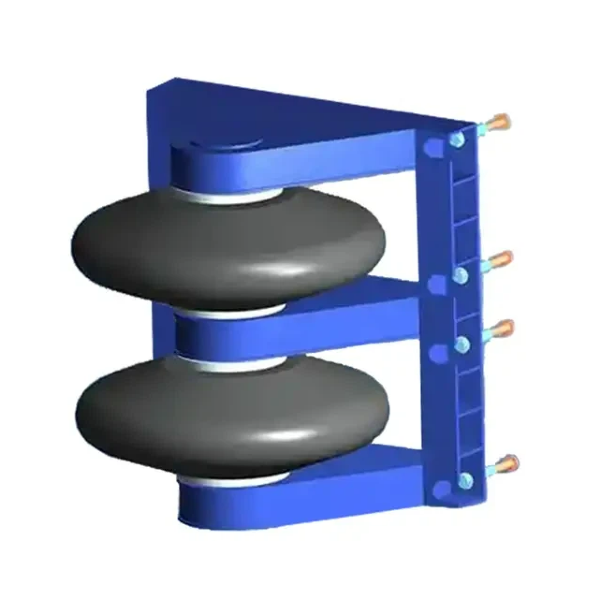
Most readers imagine side docking when they ask about standard size. This is the most common reference point because it reflects normal marina use, where the boat lies alongside a dock and the fender protects the hull from repeated light contact.
In this kind of setup, standard sizes often work well because the contact pattern is predictable. The hull meets the dock in a familiar way, and the owner can position the fenders along the beam where protection is needed most. That is why common cylindrical sizes have become the everyday baseline.
Even here, though, the word standard should be understood carefully. It works best when the berth is relatively calm and the boat is not unusually heavy or tall for its class.
Standard side-docking sizes can stop being enough once the contact pattern changes. Pilings, posts, and rafting create narrower or more uneven pressure points. Instead of a broad, manageable side contact, the hull may meet a smaller, harder structure that concentrates force.
In those cases, a size that feels standard in a marina slip may suddenly feel inadequate. The problem is not that the standard range is wrong. The problem is that the docking setup is no longer standard. This is where owners often realize that ordinary marina sizing does not always carry over to more awkward berthing situations.
That is also why fender selection should follow use, not only boat length or a familiar market size.
Once repeated contact happens in the same place, the conversation moves beyond portable size alone. A boat may be using a standard portable setup correctly and still experience wear because the berth itself needs protection. This is common at dock corners, slip entrances, quay faces, and other fixed structures.
A short reference to dock-side systems belongs here because it helps readers understand the limit of the phrase standard size. Standard portable protection works well in many cases, but repeated fixed contact often needs a more dedicated solution. That is where product categories such as dock-mounted protection become relevant without changing the main focus of the article.
Standard sizing quickly becomes less reliable when the boat is heavier or has tall freeboard. A taller hull creates a broader working contact area, and a heavier boat puts more load into the fender body during docking. Under those conditions, a common all-purpose size may compress too easily or fail to keep enough separation between hull and structure.
This is one of the clearest reasons not to rely on the word standard too literally. A standard size may be a valid starting point, but it is often only the first step for boats with more mass, more hull height, or more demanding berthing patterns.
For customers moving into broader marine applications, Hongruntong also supports more engineered protection options through its Marine Fenders range, which is better suited to heavier-duty vessel and berthing requirements than ordinary portable protection alone.
Many buyers overlook conditions when they search for a standard size. Yet berth conditions often change the answer just as much as boat dimensions do. A calm private dock and a busy marina with wake, current, and repeated movement do not place the same demand on the fender.
In exposed slips, even a commonly accepted size may not provide enough stand-off once the boat begins moving against the berth. The same thing happens in marinas with constant passing traffic, tidal movement, or rougher dock surfaces. In these cases, the best choice is often one step above the ordinary standard range.
This is where practical sizing becomes more useful than market language. A so-called standard size may be common, but the right size is the one that still protects the hull under real conditions.
The most useful way to approach standard fender size is to treat it as a baseline and then refine it. Start with the common size band that matches the boat class. Then review the factors that push the boat out of the standard category. Hull height, vessel weight, docking surface, berth movement, and frequency of use all help determine whether the baseline remains suitable.
This step is where many better buying decisions happen. Instead of asking whether the standard size is correct in theory, the owner asks whether it is sufficient in practice. That small shift in thinking usually leads to better protection and fewer surprises at the dock.
A refined approach also creates a clearer path toward mixed protection systems. Portable fenders may remain the right choice for daily use, while repeated contact points around the berth may call for dock-mounted protection. For customers planning a fuller marine protection setup, Hongruntong can support both directions with vessel-side and berth-side product options.
So what is the standard fender size? It is a helpful starting phrase, not a universal answer. Standard size works best as a baseline that must be adjusted for boat size, hull profile, and docking conditions. When owners understand that difference, they stop treating standard as a fixed rule and start using it as a smarter way to narrow the right option. If you want practical guidance on matching common size ranges to your real application, contact us at Hongruntong. Our team can help you build a better protection plan with portable solutions and more specialized Marine Fenders where higher berthing demands require more than a typical setup.
No. There is no single universal size that fits every boat. Standard fender size usually means a commonly used starting range for normal leisure and marina conditions.
Because cylindrical fenders are the most widely used general-purpose style for everyday docking. They are practical, familiar, and easy to use in many common marina setups.
It often stops being enough when the boat is heavier, has taller freeboard, or berths in exposed, busy, or high-contact environments.
It is better to use standard size as a baseline. After that, refine the choice based on hull shape, berth conditions, and whether repeated contact points need extra protection.


