

Views: 0 Author: Site Editor Publish Time: 2026-08-21 Origin: Site


Ship-to-ship (STS) operations demand strict kinetic energy management and fluid transfer integrity to prevent vessel damage and environmental spills. Mooring massive vessels like VLCCs, ULCCs, and LNG carriers presents a dual challenge. Crews must secure these ships in dynamic sea states while transferring hazardous cargo without structural failure. The industry-standard risk mitigation strategy relies on precise technology integration. Operators combine ISO-certified Pneumatic Fenders for standoff and impact absorption with reinforced floating hoses for flexible, high-pressure transfer. This combination ensures safe, continuous operations even in harsh offshore conditions. When you manage thousands of tons of displacement moving on ocean swells, standard rubber bumpers simply fail. You need engineered air cushions to absorb the berthing impact and purpose-built hoses to handle the dynamic flexing between two independent hulls.

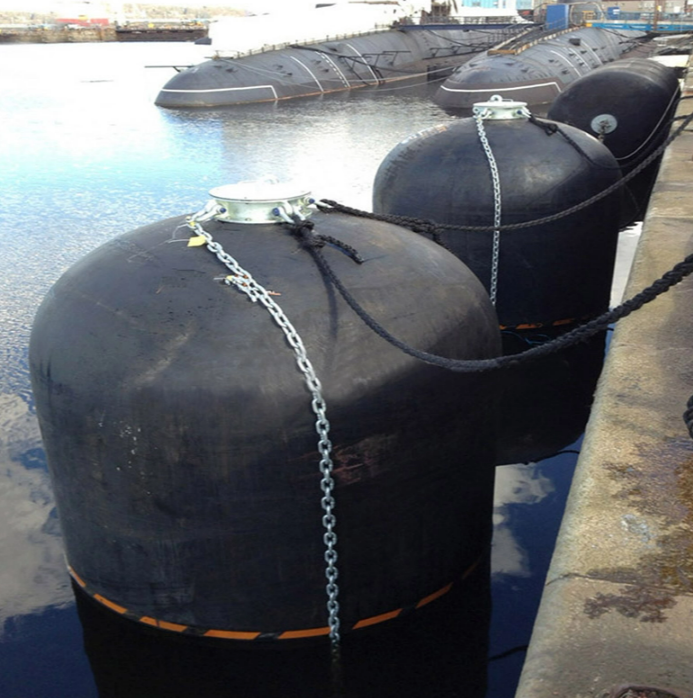
Kinetic Energy Management: Pneumatic fenders utilize compressed air to act as giant cushions, absorbing up to 90% of berthing impact energy while maintaining a critically low reaction force against vessel hulls.
Transfer Integrity: Purpose-built STS floating hoses feature reinforced fabric layers designed to withstand continuous dynamic flexing, pressure spikes, and harsh offshore marine environments.
Operational Synergy: The correct sizing of pneumatic fenders dictates the safe standoff distance, which directly prevents the over-extension, kinking, or rupture of floating hoses during transfer.
Compliance & Liability: Adhering to OCIMF guidelines and ISO standards (ISO 17357-1:2014) for both fenders and hoses is non-negotiable for insurance compliance and operational liability reduction.
Table of Contents
Managing the massive forces generated by moving vessels requires precise engineering. When two ships approach each other offshore, they carry immense kinetic energy. You must dissipate this energy safely to prevent hull breaches. Compressed air provides the most reliable mechanism for this energy absorption, far outperforming solid rubber alternatives.
Compressed air acts as an adaptive cushion based on Boyle's Law. As a vessel compresses the fender, the internal air volume decreases, and the pressure increases smoothly. This creates a high energy absorption capacity. More importantly, it maintains a critically low reaction force. Solid rubber alternatives fail in STS operations because they transfer too much residual force directly into the ship's hull. Massive vessel displacement demands a yielding barrier. Air-filled units absorb up to 90% of the impact energy. They protect the structural integrity of both ships by ensuring the reaction force never exceeds the yield strength of the hull plating.
Mooring dynamics occur in two distinct phases. The initial high-impact berthing phase presents the highest risk. The maneuvering vessel makes first contact, often at approach velocities around 0.15 meters per second. The fender compresses, absorbing the shock and halting the lateral movement. Once secured, the operation enters the continuous standoff maintenance phase. During cargo transfer, the vessels remain moored together. The fenders continuously cycle through minor compressions and expansions, buffering the ships against constant wave action and preventing metal-to-metal contact.
Offshore environments rarely offer calm conditions. Floating units adapt to dynamic sea states. They float independently, moving with the water's surface. This allows them to handle heave, pitch, and roll effectively. During rough weather approaches, ships often compress the fenders at severe angles. Traditional solid fenders lose efficiency under angled compression, often shearing or tearing. However, air-filled units maintain their full energy absorption capabilities even when compressed at a 15-degree angle, making them the only viable option for open-ocean transfers.
Lighter-hulled vessels, such as LNG carriers or specialized chemical tankers, require careful handling. Localized pressure causes structural yielding or permanent indentations in the hull plating. Air-filled units feature a massive surface area. When compressed, they flatten against the hull. This broad contact patch distributes the reaction force evenly across a wide section of the ship's internal framing. You prevent localized stress concentrations, ensuring the hull remains completely intact throughout the transfer operation.
Performance Metric | Pneumatic Fenders | Solid Rubber Fenders |
|---|---|---|
Energy Absorption | Exceptionally High (Compresses up to 60%) | Moderate (Limited compression depth) |
Reaction Force | Low and evenly distributed | High and localized |
Angled Compression | Maintains performance up to 15 degrees | Significant performance loss |
Hull Pressure | Low (Broad contact area) | High (Narrow contact area) |
Fluid transfer between moving vessels requires specialized conduits. Standard industrial hoses cannot survive offshore conditions. STS rubber hoses undergo rigorous engineering to handle high pressures, chemical exposure, and constant physical stress from ocean swells.

An STS hose features a complex, multi-layered anatomy. The inner tube provides primary chemical compatibility. Manufacturers formulate this layer specifically using Nitrile Butadiene Rubber (NBR) for crude oil, or specialized polymer linings for refined chemicals and cryogenic LNG. Surrounding the inner tube, multiple layers of synthetic tire cord provide structural reinforcement. These cords prevent the hose from bursting under high pump pressures. Finally, a thick, weather-resistant outer cover protects the internal layers from UV degradation, saltwater corrosion, and physical abrasion against the ship's rail.
Offshore transfer requires hoses that float independently. Engineers integrate closed-cell foam buoyancy layers directly into the hose carcass. This eliminates the need for cumbersome external floats that can snag on deck equipment. Integrated buoyancy prevents the hose from sinking or entangling with the vessel's propellers. It provides a reserve buoyancy of at least 20%, ensuring the hose remains visible even when fully loaded with heavy crude. It also maintains a safe, consistent bend radius. The hose remains highly flexible, allowing it to drape naturally between the two manifolds without kinking under tension.
Operators select hose specifications based on strict operational parameters. Pump capacities and required transfer windows dictate the necessary flow rates. You must match the hose diameter to these requirements to prevent bottlenecks and excessive fluid velocity. Pressure ratings typically range from 15 bar for standard operations up to 21 bar for high-pressure chemical transfers.
Hose Type | Typical Diameter | Pressure Rating | Primary Application |
|---|---|---|---|
Standard Oil STS | 8" to 12" | 15 Bar | Crude Oil / Refined Products |
High-Pressure Chemical | 6" to 10" | 21 Bar | Aggressive Chemicals |
Cryogenic LNG | 8" to 10" | Composite specific | Liquefied Natural Gas |
Vapor Return | 8" to 12" | 15 Bar | Gas balancing |
Safe STS operations require treating fenders and hoses as a single, integrated system. One technology directly supports the function of the other. Failing to coordinate their specifications leads to severe operational hazards, including parted hoses and massive environmental spills.
A strict mathematical relationship exists between fender diameter and hose length. The fender dictates the physical distance between the two ships. When sizing the equipment, you must account for maximum compression. If a 3.3-meter diameter fender compresses by 50% during a swell, the vessels move 1.65 meters closer together. The hose string must possess enough slack in its catenary curve to accommodate this movement without dragging on the ship's side. Conversely, when the vessels roll apart, the standoff increases. The hose must be long enough to prevent over-extension and parting at the manifold flanges.
Moored vessels do not remain static. They move independently across six degrees of freedom: heave, pitch, roll, yaw, sway, and surge. This differential movement creates immense stress on the transfer manifolds. The combination of yielding air cushions and flexible hoses absorbs this kinetic energy. The fenders allow the ships to roll and sway without colliding. Simultaneously, the floating hoses flex and bend, absorbing the distance changes without transferring mechanical stress to the ship's rigid piping infrastructure.
Emergency situations require immediate disconnection. Marine Breakaway Couplings (MBCs) sit within the hose string to prevent spills during a sudden vessel separation. For an MBC to function correctly, the hose string must maintain a predictable geometry. The reliable standoff provided by properly sized fenders ensures the hose remains unobstructed. If the vessels drift apart due to a mooring line failure, the MBC experiences clean, direct tension. This allows the internal weak bolts to shear, instantly sealing the fluid path on both sides before the hose carcass ruptures.
Procuring equipment for STS operations demands strict adherence to engineering frameworks. Guesswork leads to catastrophic failures. Procurement teams must evaluate specifications against vessel profiles, displacement tonnages, and historical environmental data for the transfer location.
Fender selection relies on three primary variables: vessel displacement (DWT), maximum allowable approach speed, and anticipated sea state. You calculate the required energy absorption based on the kinetic energy of the maneuvering vessel. Standard sizing charts and OCIMF recommendations provide the baseline. You must select a unit that exceeds the calculated energy requirements. This safety margin accounts for unexpected wind gusts or sudden swells during the final approach phase.
Vessel Size (DWT) | Recommended Fender Size (Diameter x Length) | Typical Quantity Required |
|---|---|---|
Up to 10,000 | 1.5m x 3.0m | 3 to 4 |
10,000 to 50,000 | 2.0m x 3.5m | 4 |
50,000 to 100,000 | 2.5m x 5.5m | 4 to 5 |
Over 100,000 (VLCC) | 3.3m x 6.5m or 4.5m x 9.0m | 4 primary + 2 secondary |
Operators choose between Sling-type and Chain-Tire Net (CTN) configurations. Sling-type units feature a smooth outer rubber body with attachment eyes at each end. They are lighter and suit smaller vessels or specific terminal operations where hull scratching is a primary concern. However, CTN configurations remain strictly preferred for heavy-duty STS operations. The chain and tire net provides a rugged external protective layer. It absorbs abrasions, prevents punctures from hull protrusions, and extends the operational life of the main rubber body in harsh offshore environments.
Hose specification requires analyzing the exact nature of the cargo. Fluid compatibility dictates the inner tube material. You must also consider the operational tempo. Continuous transfer operations demand higher fatigue resistance than discontinuous, occasional transfers. The required bend radius determines how tightly the hose can loop between the vessels without damaging the internal reinforcing cords. Always specify hoses that exceed the minimum bend radius expected during the worst-case vessel roll.
Certifications separate reliable equipment from dangerous liabilities. Procurement mandates strict adherence to international standards. For air-filled units, ISO 17357-1:2014 is non-negotiable. This standard dictates the material quality, performance testing, and manufacturing processes. For offshore hoses, GMPHOM 2009 (or the latest OCIMF guidelines) governs the design and testing. You must demand verifiable, third-party testing documentation from recognized classification societies for every piece of equipment before deployment.
Executing an STS transfer requires strict preparation. The setup sequence directly impacts the safety of the entire operation. Crews must follow established protocols to ensure the equipment functions exactly as engineered.
Preparation begins long before the vessels meet. Support vessels handle the mobilization. You must fully deploy, inflate, and secure the standoff equipment first.
The support vessel approaches the receiving ship and passes messenger lines.
Deck crews heave in the primary pennant wires attached to the fenders.
Crews secure the chain-tire net to the designated mooring bitts along the parallel body of the receiving vessel.
Operators verify the internal air pressure matches the 50 kPa or 80 kPa baseline requirement.
Only after establishing the safe standoff barrier do crews rig the floating hoses.
Crews pass the hoses between the vessels using certified lifting gear and dedicated hose saddles.
Managing massive equipment requires logistical planning. Support vessels and terminals face severe deck space constraints. Deflated storage saves significant space but requires high-capacity air compressors and time for deployment. Inflated storage demands massive deck footprints but allows for rapid mobilization. You must evaluate these trade-offs based on your operational tempo. Hose racks also require dedicated footprints to prevent stacking damage. Storing hoses flat prevents the internal wire helix from crushing under its own weight.
Equipment reliability depends on rigorous maintenance schedules. Crews must perform routine internal pressure checks on all air-filled units before every operation. Safety valves require periodic testing to ensure they vent correctly during extreme compression events, typically set to pop at 150% of the initial internal pressure. Inspect the chain-tire nets for worn shackles, rusted chains, or degraded tires. For hoses, visual inspections check for cover abrasions, localized bulging, or flange damage. You must execute mandatory hydrostatic testing according to OCIMF guidelines and strictly enforce retirement criteria based on operational hours or test failures.
STS operations leave no room for error. Understanding common failure modes allows operators to implement effective preventative measures. Most incidents stem from poor planning, rushed rigging, or compromised equipment.
Selecting equipment based on ideal conditions invites disaster. Operators sometimes calculate energy absorption using gentle approach speeds. When a vessel approaches faster due to wind or current, the undersized unit bottoms out. It compresses fully, losing all energy absorption capability. The remaining kinetic energy transfers directly into the hull, causing structural yielding or breaches. Always size equipment for worst-case scenarios, factoring in maximum allowable approach speeds and heavy sea states.
Hoses fail prematurely due to poor handling. Incorrect lifting techniques stress the internal cords. Using narrow wire slings instead of proper lifting saddles causes localized crushing of the hose carcass. Dragging hoses over sharp gunwales tears the weather-resistant cover, exposing the reinforcement layers to saltwater and rapid degradation. Ignoring minimum bend radius limits during rigging causes the inner tube to kink and rupture. Crews must use dedicated hose handling cranes and roller fairleads to protect the equipment during deployment and retrieval.
The maritime market contains counterfeit equipment. Procuring non-ISO certified units presents severe operational and legal dangers. These units often lack the required synthetic tire cord reinforcement. They burst under standard compression loads. Unrated hoses lack verifiable testing documentation and fail unpredictably under pressure. Using non-compliant gear voids insurance coverage and exposes the operator to massive liability in the event of a spill. Always verify third-party certificates directly with the issuing classification society.
The combination of Pneumatic Fenders and floating hoses remains a strict operational necessity for safe, compliant STS transfers. This integrated system manages massive kinetic energy while ensuring secure fluid transfer in unpredictable offshore environments. Bypassing these standards guarantees structural damage and environmental disaster. Procurement teams must exercise extreme diligence. Prioritize vendors who provide fully documented, third-party tested equipment. Ensure every item strictly adheres to ISO and OCIMF standards. Your operational safety depends entirely on the verifiable quality of your standoff and transfer gear.
For operators seeking dependable marine equipment backed by industry-focused manufacturing expertise, Hongruntong Marine provides marine fender and offshore transfer solutions designed to support demanding maritime applications. With a strong focus on product quality, technical reliability, and practical marine operating requirements, the company supports safer and more efficient berthing, mooring, and offshore transfer operations worldwide.
Conduct a fleet-wide audit of all current STS equipment to verify ISO 17357-1:2014 and GMPHOM 2009 compliance.
Review and update maintenance logs, ensuring routine safety valve testing and hydrostatic hose checks are current.
Consult with marine engineers to recalculate berthing energy requirements based on your updated vessel profiles and worst-case sea states.
Implement strict rigging and handling training for all deck crews to prevent premature hose fatigue.
A: They use compressed air to act as a highly resilient cushion. When a vessel makes contact, the internal air compresses, absorbing massive amounts of kinetic energy. This mechanism maintains a critically low reaction force against the hull. It ensures a safe, predictable standoff distance between two moving vessels during the entire transfer operation.
A: Chain-tire nets feature an external protective layer of chains and rubber tires. This rugged exterior absorbs abrasions and prevents punctures in harsh offshore environments. Sling-types lack this net. They are lighter, feature a smooth rubber body, and are typically used for smaller vessels or operations where hull scratching must be completely avoided.
A: The operational lifespan depends heavily on usage frequency and maintenance. Typically, hoses last between three to five years under standard conditions. Strict adherence to GMPHOM guidelines, routine hydrostatic testing, and mandatory retirement criteria dictate the exact timeline. Severe offshore conditions or improper handling significantly reduce this lifespan.
A: Sizing requires calculating the anticipated kinetic energy of the berthing vessel. You determine this using the vessel's displacement (DWT) and the maximum allowable approach velocity. You then select a unit with an energy absorption capacity that exceeds this calculated value, factoring in safety margins for rough sea states and weather.
A: Floating hoses feature integrated closed-cell foam buoyancy layers, allowing them to float independently without cumbersome external floats. They possess superior flexibility to handle continuous dynamic vessel movement. Furthermore, their reinforced synthetic tire cord layers are engineered specifically to withstand high pump pressures and harsh offshore environments.
A: Routine maintenance ensures operational readiness. Crews must perform regular internal pressure monitoring to verify the air cushion remains at the specified baseline. Safety valve inspections are critical to ensure they vent properly during extreme compression. Additionally, you must conduct visual wear assessments on the chain-tire net and the outer rubber body.
A: They perform exceptionally well in rough conditions, adapting to wave action and maintaining energy absorption even when compressed at a 15-degree angle. However, they have physical performance limits. Masters must monitor weather forecasts closely. When wave heights or wind speeds exceed the equipment's rated safety thresholds, STS operations must be suspended immediately.


