

Views: 0 Author: Site Editor Publish Time: 2026-04-13 Origin: Site


A clean docking approach can still end with hull marks if the boat fenders are too small for the boat or the berth. That is why sizing matters so much. The right size helps reduce impact, protect the hull finish, and create more space between the boat and the dock. As a marine protection supplier since 1990, Hongruntong provides a wide range of solutions for different vessel types and docking conditions, so choosing the right fender size is not just a technical detail but an important part of reliable vessel protection.
The quickest way to estimate boat fender size is to begin with boat length. For many recreational boats, a practical rule is about 1 inch of fender diameter for every 4 to 5 feet of boat length. This is not a final answer, but it gives a useful starting point.
Boat length works well as a first filter because longer boats usually carry more weight and generate more pressure when docking. A small day boat may perform well with compact fenders, while a larger cruiser will usually need more diameter and more body length to keep the hull properly separated from the dock.
Boat length alone is not enough. Two boats with the same length may still need different protection. A taller hull with more freeboard often needs a larger fender because the contact point sits higher and the stand-off distance becomes more important. A heavier boat also puts more force into the fender during docking.
That is why sizing should be based on three factors together: boat length, hull profile, and operating conditions. If the boat is heavy or tall-sided, it is usually better to move one step up instead of choosing the smallest acceptable size.
A size chart is useful because it helps readers avoid undersizing. The goal is not to force every vessel into one fixed number, but to provide a practical range that can be refined later.
Boat category | Fender diameter range | Fender length range | Typical docking note |
Small boats | 3 to 5.5 inches | 10 to 20 inches | Protected docks and calm water |
Mid-size boats | 6 to 8.5 inches | 20 to 27 inches | Mixed marina use |
Larger boats | 10.5 to 15 inches and above | 30 to 36 inches and above | Heavier contact and wider beams |
These ranges are starting points. Final selection should still reflect berth conditions, freeboard, and how often the boat docks in exposed or high-contact areas.
Small boats and day boats usually do well with compact cylindrical fenders when docking conditions are calm. If the berth is sheltered and the boat only sees light marina contact, moderate sizes often provide enough protection.
Still, even a small boat needs real separation from the dock. Fenders that look neat but compress too easily do not offer much value. For everyday leisure use, practical protection should always come before appearance.
Mid-size boats often need more protection than owners first expect. A wider beam, a heavier hull, or more varied docking conditions can quickly make basic sizing feel inadequate. This is especially true for fishing boats and pontoons that move between different slips, fuel docks, and marina layouts.
In this range, boat fender size should usually be chosen with more caution. A slightly larger size often gives better performance and more flexibility across changing docking conditions.
Larger vessels need a more serious approach. Once hull weight and contact force rise, light-duty protection may no longer be enough. At that stage, sizing is not only about convenience. It becomes part of a broader berthing safety plan.
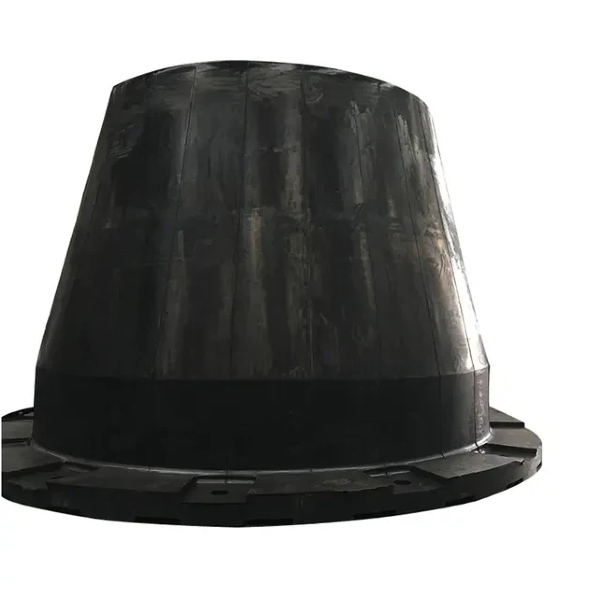
This is also where marine operators often look beyond basic portable protection and begin thinking about more robust systems. Hongruntong supports that transition with product lines for both vessel-side and dock-side protection, helping different users match the right level of impact resistance to their working environment.
A calm marina and an active berth do not place the same demands on a fender. Wake, surge, and tidal movement can repeatedly compress the fender and push the hull closer to the dock than expected. In those conditions, larger fenders offer more reliable separation.
If the boat is berthed where passing traffic creates frequent movement, or if the water level changes enough to shift contact points, sizing up is usually a sensible decision. The extra margin often prevents damage that smaller fenders cannot absorb.
Dock surface also affects size choice. A smooth floating dock is much more forgiving than a concrete wall, rough timber edge, or narrow piling. Hard surfaces increase abrasion and create more concentrated pressure on the fender body.
In these cases, choosing a larger and more durable fender is often the smarter move. The boat may not have changed, but the contact surface has, and that changes what the fender must do.
Size matters, but shape matters too. Cylindrical fenders remain a popular choice because they are versatile and easy to rig. Round fenders can provide greater stand-off in concentrated contact situations. Flat-style protection may suit certain docking layouts where a different contact surface is more effective.
The key is to match the fender not only to the boat, but also to the way the boat meets the dock. A good size in the wrong shape may still leave weak points in the protection setup.
Even the right size will not work well if there are too few fenders on the boat. Protection should cover the most likely contact areas, especially near the widest part of the beam and any points that touch first during docking.
For larger boats, spacing becomes especially important. A gap between fenders can allow direct hull contact even when the individual fenders are well sized. Good sizing and good placement should always work together.
Portable boat fenders are often enough for routine docking, marina stays, and boats that move between different berths. They are flexible, easy to reposition, and practical for daily use. For many owners, the best approach is to choose a slightly more capable size rather than the smallest option that seems acceptable.
That gives more confidence in changing conditions and reduces the chance of minor but repeated hull damage over time.
Portable fenders protect the boat, but repeated contact at the same berth may require fixed dock-side protection as well. Slip entrances, quay walls, pilings, and dock corners often benefit from permanent impact protection, especially where boats berth regularly in the same place.
That is where Hongruntong’s Dock Fenders range becomes relevant. For users who need more complete protection, dock-mounted solutions can work together with portable fenders to reduce impact on both the vessel and the structure.
The best answer to “what size boat fenders do I need” is simple: start with boat length, then adjust for freeboard, hull weight, and docking conditions. That approach keeps the selection focused on real protection instead of guesswork. When the size is right, docking becomes safer and far less stressful. If you are planning a more dependable setup for your vessel or berth, Hongruntong can help you compare options and build a protection plan that fits your application. Contact us to learn more about the right solution for your operation, from portable boat protection to Marine Fenders for more demanding marine environments.
A 20-foot boat often starts with mid-range recreational fenders, but the final size depends on freeboard, hull weight, and berth conditions. If the docking area is rough or exposed, moving up one size is often the better choice.
Boat length is the best starting point, but it should not be the only factor. Hull height, weight, and dock conditions can all change the size you really need.
Yes. Wake, surge, and tidal movement increase compression and repeated side pressure. A larger fender usually gives better stand-off and more dependable protection.
If the boat berths in the same place regularly, especially near corners, pilings, or hard dock edges, fixed dock protection can add another level of safety and reduce repeated impact damage.


