

Views: 0 Author: Site Editor Publish Time: 2025-12-12 Origin: Site


Marine fenders are essential for protecting both boats and docks from damage during mooring and berthing. These protective devices cushion impacts, preventing costly hull damage and reducing repair time. For boat owners, selecting the right fender is crucial for maximum protection.
In this article, we’ll explore the different types of marine fenders and their specific applications. You will learn how to choose the best fender for your boat and key factors to consider for optimal protection.
Marine fenders are protective devices designed to absorb and dissipate the energy from collisions between boats and docking structures. They are typically made from durable materials like rubber, foam, or inflatable components and can be mounted on the boat or on the dock. Their primary role is to cushion impacts, ensuring that boats do not sustain significant damage during docking or mooring procedures.
Boats face frequent collisions with docks, piers, and other vessels while docking or mooring. Without proper fendering, these impacts can lead to damage such as hull dents, scratches, and even structural failure. Fenders are designed to absorb the kinetic energy from these collisions, preventing costly repairs and ensuring the boat’s longevity. In addition, they prevent unnecessary wear on the dock or pier, extending the lifespan of marine infrastructure.
Fenders for a boat play a crucial role in protecting your vessel from damage during docking and mooring. A high-quality fender should possess the following key features to ensure maximum protection and longevity:
Feature | Description |
Durability | A good fender should be able to withstand harsh marine environments, such as saltwater exposure and UV rays, without deteriorating. It should be made from robust materials like rubber or foam elastomer to ensure long-lasting effectiveness. |
Energy Absorption | The fender must efficiently absorb and dissipate impact forces, minimizing the risk of hull damage. The better the energy absorption, the less stress is transferred to the boat’s structure. This is crucial when docking in rough conditions. |
Flexibility | It should be adaptable to different boat shapes and sizes. A flexible fender can properly cushion the impact, regardless of whether the boat has a flat or curved hull, providing effective protection in various docking scenarios. |
Ease of Maintenance | Fenders should be easy to inspect for wear and tear, clean, and replace when needed. Regular maintenance ensures the fender performs optimally over time, and a design that allows for quick cleaning and replacement is an added benefit. |
Cylindrical fenders are one of the most common types used across various boat sizes. Their cylindrical shape allows for easy mounting either horizontally or vertically, making them adaptable to different docking situations. These fenders are often used in ports and shipyards for a wide range of vessel sizes, from small leisure boats to large cargo ships.
● Application: Ideal for vessels with varying freeboard heights.
● Benefits: Easy to install, versatile, and provides consistent energy absorption.
● Best Use Cases: Small boats to large ships docking in ports, harbors, and shipyards.
Cone fenders are a specialized variation of cylindrical fenders designed to handle higher impacts. Their conical shape allows for better performance under compression and provides additional stability when large vessels like oil tankers or cruise ships dock.
● Application: Best for large vessels like oil tankers, container ships, and cruise ships.
● Benefits: High energy absorption, enhanced stability, and excellent for large impacts.
● Best Use Cases: Oil facilities, cargo berths, and large vessel docking.
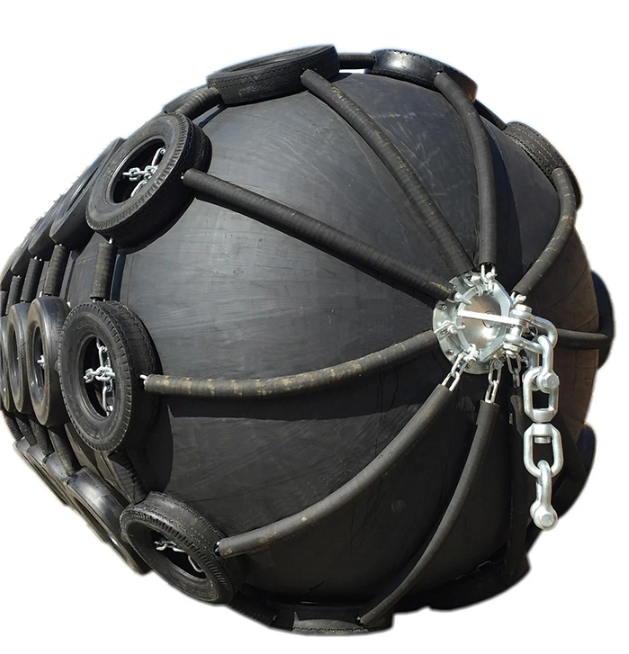
Pneumatic fenders are inflatable devices that use compressed air to absorb impact. These fenders are highly flexible, portable, and offer exceptional protection in varying tidal conditions. They are commonly used in offshore operations and ship-to-ship transfers.
● Application: Ideal for ship-to-ship transfers, oil rigs, and areas with extreme tidal variations.
● Benefits: Easy to deploy, portable, requires minimal maintenance, and can absorb large amounts of impact.
● Best Use Cases: Offshore operations, ship-to-ship berthing.
Fender Type | Application | Key Benefits |
Cylindrical Fenders | Vessels with varying freeboard heights | Easy to install, versatile, consistent absorption |
Cone Fenders | Large vessels like oil tankers and cruise ships | High energy absorption, stable, great for large impacts |
Pneumatic Fenders | Offshore operations, ship-to-ship transfers | Portable, minimal maintenance, absorbs large impacts |
When selecting a marine fender, consider its durability and the level of maintenance required. Fenders like pneumatic and foam-filled options tend to require less maintenance, while rubber-based models may need more frequent inspections and replacements. The materials used in the fender’s construction can also affect its resistance to wear and tear over time.
● Pneumatic fenders are low-maintenance but need proper inflation levels.
● Foam-filled fenders are virtually maintenance-free and resistant to harsh marine conditions.
Different fenders absorb impacts differently, depending on their design. For example, pneumatic fenders are excellent for absorbing impacts at an oblique angle, while cylindrical fenders are suitable for lighter collisions. The fender’s ability to absorb energy depends on its size, material, and shape.
● Cylindrical fenders offer reliable performance in various docking conditions.
● Cone fenders provide high impact absorption, especially for large ships.
The available space for fender installation on a boat or dock may limit your choices. Smaller vessels with limited mounting space benefit from compact options like arch fenders, which are easy to install in confined areas. For larger vessels, options like cell fenders provide both durability and flexibility.
● Arch fenders are ideal for vessels with limited installation space.
● Cell fenders are versatile and widely used for large vessels in docks.
When selecting fenders for a boat, there are several important factors to consider to ensure the best protection for your vessel. Below is a summary of the key considerations:
Factor | Description |
Boat Size | Smaller boats need smaller, lighter fenders, while larger vessels require bigger, more durable options. |
Docking Conditions | Consider the type of dock, its height, and tidal variations when choosing the fender. |
Weather Exposure | Choose materials that can withstand the specific weather conditions your boat will encounter. |
Impact Frequency | For boats that dock in rough conditions, select fenders with higher energy absorption capabilities. |
Matching the correct fender type to your boat’s docking needs is essential for providing optimal protection. For instance:
● Cylindrical fenders work well for boats docking in calm conditions, offering moderate protection.
● Pneumatic fenders are perfect for high-impact scenarios, such as ship-to-ship transfers or berthing in extreme tidal conditions.
While premium fenders like cone fenders or pneumatic fenders offer higher protection levels, they may come at a higher initial cost. On the other hand, basic options like cylindrical fenders are more affordable but may not offer the same level of protection in severe conditions. It’s important to balance cost with the protection level needed for your vessel’s typical operating environment.
Foam-filled fenders are popular for their durability and ease of use. They are unsinkable, virtually maintenance-free, and resistant to chemicals and harsh marine conditions. These fenders are ideal for permanent installations in high-traffic ports and shipyards.
● Benefits: Unsinkable, resistant to harsh conditions, and requires little to no maintenance.
● Best Use Cases: High-impact areas like ports, harbors, and shipyards.
W-fenders are designed for vessels that experience frequent docking or high abrasion. They are commonly used on workboats, tugboats, and vessels involved in heavy-duty operations.
● Benefits: High abrasion resistance, easy installation, and excellent protection for both vessel and dock.
● Best Use Cases: Tugboats, barges, and vessels requiring frequent maneuvering.
Maintaining your marine fenders is essential for ensuring their longevity and continued protection. Regularly inspect fenders for signs of wear, such as cracks, tears, or loss of shape. Clean them after each use to remove debris that could cause damage over time.
● Check for damage: Inspect fenders for visible cracks or abrasions.
● Clean regularly: Rinse off saltwater, debris, and dirt to prevent corrosion.
Over time, fenders can degrade due to exposure to the elements or repeated impact. If a fender becomes cracked, loses its shape, or fails to absorb impact as effectively, it’s time to replace it. Ensuring that fenders are in good condition can prevent costly hull repairs.
Selecting the right marine fender is crucial for protecting your boat and avoiding expensive repairs. With various options like cylindrical, cone, pneumatic, and foam-filled fenders, understanding their applications ensures proper protection. Regular maintenance and timely replacements keep fenders effective.
Whether for a fleet or personal use, choosing the right fender enhances your boat’s safety and longevity. Hongruntong Shipbuilding (Beijing) Co., Ltd. offers high-quality fenders designed to provide lasting value and reliability in all docking conditions.
A: Marine fenders are used to protect boats and docking structures from damage during mooring and berthing by absorbing impact forces.
A: Common types of fenders for a boat include cylindrical, cone, pneumatic, and foam-filled fenders, each designed for specific docking conditions.
A: Fenders for a boat prevent hull damage by absorbing the impact during docking, reducing costly repairs and enhancing safety.
A: Pneumatic fenders are inflatable and absorb impact through compressed air, providing flexibility and protection in varying tidal conditions.
A: Cylindrical fenders are often the best choice for boats in harbors, offering versatility and consistent performance in docking scenarios.
A: Fenders for a boat should be replaced when they show signs of wear, such as cracks or loss of shape, to maintain effective protection.


