

Views: 0 Author: Site Editor Publish Time: 2025-12-17 Origin: Site


Boating is a fun and relaxing activity, but it comes with its challenges. One of the most important tasks is protecting your boat during docking. Fenders for a boat are essential in shielding the hull from impacts that can cause serious damage. In this guide, we will show you how to position fenders correctly to keep your boat safe and avoid costly repairs.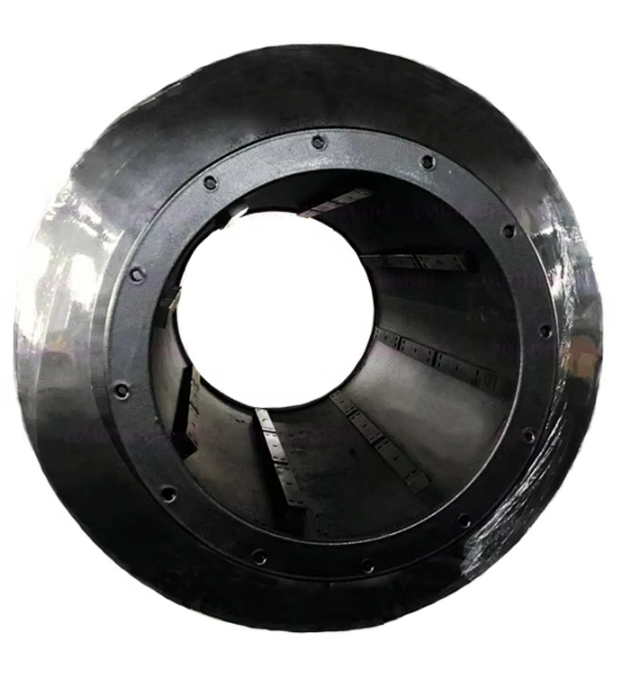
Fenders for a boat are cushioned devices that act as a barrier between your boat and surrounding surfaces, absorbing the shock from impacts. They are typically made of durable materials such as rubber or foam and can be inflated or filled with air or water. Their primary purpose is to prevent damage to your boat's hull when docking, rafting, or in close quarters with other vessels. Without proper fender placement, your boat is at risk of scratches, dents, or even structural damage.
There are several types of fenders designed to meet different needs and boat types. Here’s a quick breakdown of the most common fender types:
● Cylindrical Fenders: The most commonly used fenders for leisure boats. They are ideal for use on vertical or horizontal surfaces and can be hung or placed in various positions.
● Round Fenders: Common on larger yachts or commercial vessels. These are better for larger, more rounded hulls.
● Flat Fenders: These are used for protecting boats in tight spots or narrow marina fingers, offering a larger surface area of protection.
When deciding between inflatable and foam fenders, consider the environmental conditions and your storage needs. Inflatable fenders are easy to store but can leak, while foam fenders hold their shape longer and provide more consistent protection under pressure.
Fender Type | Ideal For | Features |
Cylindrical Fenders | Leisure boats | Can be hung or placed in various positions |
Round Fenders | Larger yachts and commercial vessels | Better for rounded hulls |
Flat Fenders | Tight spaces or narrow marina fingers | Provides a larger surface area protection |
The size of the fender plays a crucial role in its effectiveness. If you have a larger boat, you'll need bigger fenders to ensure they offer sufficient protection. On the other hand, smaller boats might only require compact fenders. A general rule of thumb is that the fender's diameter should be around 25% of the boat’s beam (the widest part of the boat). Additionally, the length of the fender should be long enough to cover the majority of the hull that comes in contact with the dock or another vessel.
Choosing the correct fender isn’t only about size. Here are a few factors to consider:
● Boat Type: Larger vessels require bigger and sturdier fenders for adequate protection.
● Weather Conditions: In stormy or windy conditions, fenders may need to be more robust or adjusted frequently.
● Dock Type: Floating docks, fixed docks, and pontoons may require different fender setups due to varying heights and surfaces.
● Frequency of Docking: If you dock frequently in busy marinas or along docks with varying heights, you may need more adjustable and flexible fenders.
Factor | Considerations | Why It Matters |
Boat Type | Larger vessels need bigger, sturdier fenders | Ensures adequate protection for hulls |
Weather Conditions | Stormy or windy conditions require robust fenders | Helps prevent damage in rough conditions |
Dock Type | Floating docks, fixed docks, pontoons vary | Affects fender height and positioning |
Frequency of Docking | Frequent docking requires flexibility | Allows for easier adjustments when needed |
Positioning fenders correctly starts with attaching them securely to the boat. Always tie fender lines to solid points, such as cleats or dedicated fender eyes, rather than thin wires or handrails that aren’t designed for stress. Use a reliable knot such as the clove hitch, which is easy to tie and adjust. Alternatively, for a more permanent and secure setup, consider using the round turn and two half hitches.
To protect your vessel from damage during docking, you need to distribute fenders strategically at key points: the bow, midship, and stern. Here’s a breakdown of where and why to place your fenders for maximum protection.
Location | Placement Tips | Purpose | Considerations |
Bow | Place a fender near the bow for head-first docking | Protects the bow from impacts during docking | Most exposed when approaching a dock head-first |
Midship | Position a fender around the widest part of the hull | Covers the largest area of the boat's hull | Provides the most extensive protection from side impacts |
Stern | Attach a fender at the stern when reversing or docking against another vessel | Prevents damage when reversing or docking close to another boat | Ensures protection for the transom and swim platform |
If your boat has a swim platform, don’t overlook it. When docking near a piling or a floating dock, stern fenders will protect this area. Since this part of the boat is more likely to be exposed to impact, additional protection here can prevent costly damage.
To maximize the protection offered by your fenders, adjust their height. The ideal position is to have the lower third of the fender resting against the dock or adjacent boat. This ensures that the fender provides full coverage and absorbs the shock of impact. A fender positioned too high or too low won’t provide adequate protection, potentially leading to hull damage.
Fenders can swing in strong winds, which reduces their effectiveness. To prevent this, secure them properly and consider weighing down inflatable fenders with sandbags or filling them partially with water. This helps to keep them in place, minimizing unnecessary movement.
Docking parallel to the dock or rafting up against another boat requires different fender setups. When docking parallel, you should use at least three fenders along the side—one near the bow, one amidships, and one near the stern. Rafting up against another boat requires aligning the fenders to the hull shape of the adjacent boat, ensuring both vessels are protected.
Tides, waves, and wind can all affect how your fenders sit against the dock or neighboring boat. It's important to adjust fender height based on the current water levels. After docking, regularly check your fenders to ensure they remain in place as the water conditions change. Strong waves or sudden wind shifts can move the fenders, reducing their effectiveness.
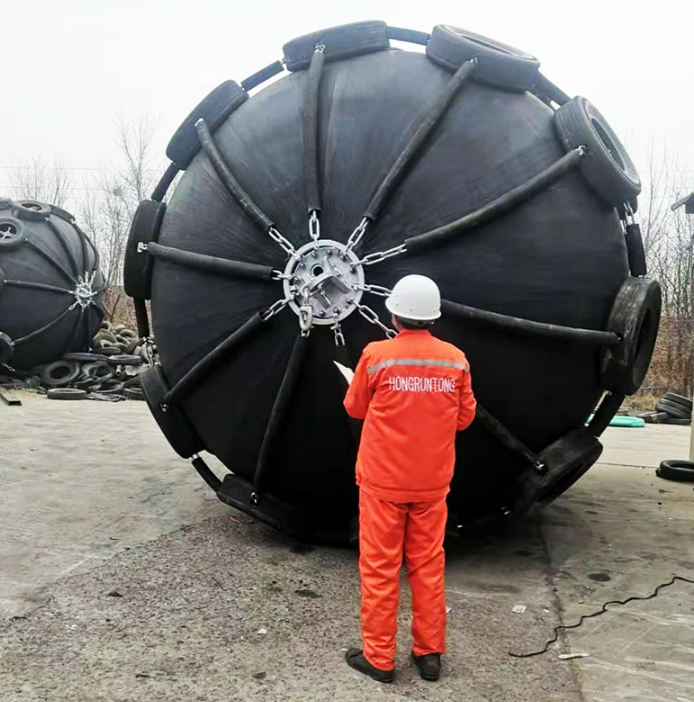
Hanging fenders are the go-to option for most boaters. They’re easy to deploy, can move with the boat, and are highly adjustable. However, their flexibility means they can be susceptible to damage or dislocation in rough conditions. If you use inflatable fenders, be mindful that they can deflate or pop under pressure.
Fixed dock bumpers offer a more permanent solution. They don’t require adjustment and provide consistent protection in predictable docking environments. These bumpers absorb shock without compressing, providing better stability than soft, inflatable fenders.
A hybrid setup combines the best of both worlds, offering flexibility and stability. Hang your primary fenders where you need them most and add fixed dock bumpers to manage specific high-contact zones, such as corners or tight slips. This comprehensive system ensures 360° protection.
Type | Key Benefit |
Hanging Fenders | Flexible, adjustable, easy to deploy |
Fixed Dock Bumpers | Permanent, stable, no adjustments needed |
Hybrid Setups | Best of both flexibility and stability |
When not in use, store your fenders in a dry, cool place to prevent UV damage and extend their lifespan. Some boats come with fender lockers or baskets designed to keep them secure and out of the way while cruising. Always make sure fenders are easily accessible when docking.
Check fenders for signs of wear, such as UV damage, cracks, or loss of air pressure. Inflatable fenders may need to be re-inflated regularly, while foam fenders should be checked for shape retention. Regular maintenance ensures that they function optimally when needed.
Fenders don’t last forever. When you notice discoloration from UV damage, deformation, or tears in the material, it’s time to replace them. Worn-out fenders provide less protection, leaving your boat vulnerable to damage.
Properly positioning fenders for a boat is crucial for protecting your vessel during docking. By selecting the right type, ensuring proper placement, and performing regular maintenance, you can prevent costly damage. Whether using hanging fenders, fixed bumpers, or a hybrid setup, adjusting them based on current conditions is key. Regular checks and adjustments will keep your boat safe. Hongruntong Shipbuilding (Beijing) Co., Ltd. offers high-quality fenders designed for optimal protection, providing reliable solutions for boat owners.
A: Fenders for a boat are protective devices that shield the hull from impacts with docks, other boats, or structures. They prevent costly damage by absorbing shock during docking or mooring.
A: To position fenders correctly, attach them at key points like the bow, midship, and stern. Ensure the lower third of the fender touches the dock or neighboring boat for optimal protection.
A: Choose fenders based on boat size and docking conditions. Larger boats need bigger fenders, while smaller vessels require compact ones for effective protection.
A: Inflatable fenders for a boat are flexible but may not perform as well in extreme conditions. Foam fenders tend to hold their shape better under pressure, making them more reliable in rough weather.
A: Fenders should be adjusted based on changing water levels, tides, or wind conditions to maintain proper hull protection and prevent unnecessary damage.


